
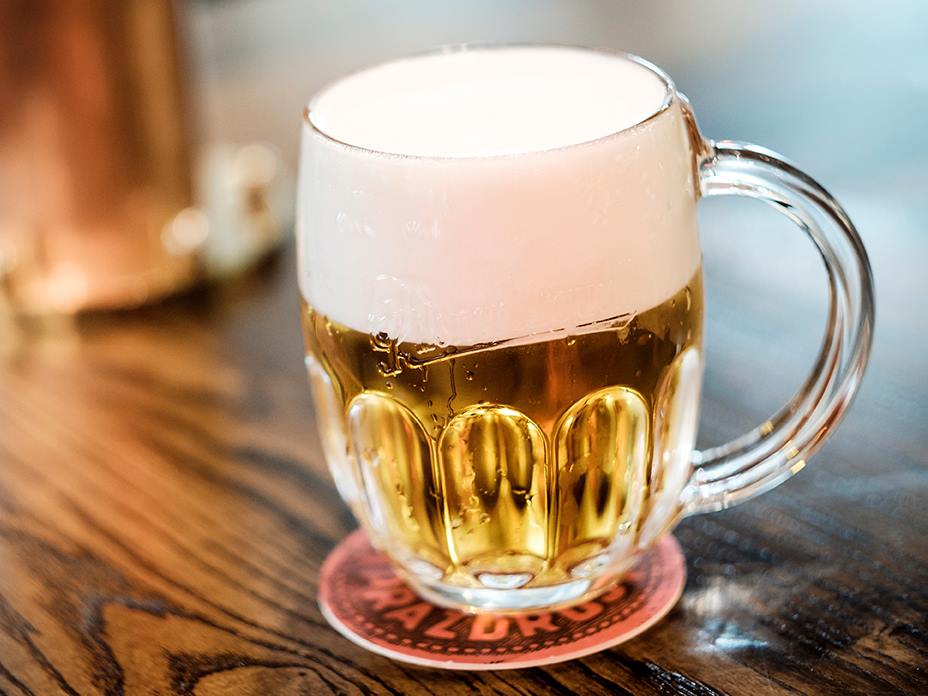
Why tank Pilsner is the Prague beer to start with
Prague has plenty of craft beer, dark lager, sour beer, and brewery taprooms now. Start somewhere simpler. A properly poured tank Pilsner Urquell is the city in one glass: golden lager, wet foam, herbal Saaz bitterness, soft malt, and a pub rhythm that makes the beer feel less like a product and more like a habit.
Pilsner Urquell matters because it is the original pale lager from Plzeň, first served in 1842, and the style it created became the reference point for pilsner around the world. In Prague, the most persuasive version is not the bottled export or a tired keg pour. It is the unpasteurized tank beer in a pub that sells enough of it to keep the tanks fresh.

How tank Pilsner works
Tankovna pubs receive Pilsner Urquell into large stainless-steel tanks instead of standard pub kegs. Inside the tank is a sealed beer bag. Air pressure squeezes the bag from the outside, pushing beer to the taps without forcing extra gas through the lager. The point is simple: protect the beer from oxygen, keep it cold, and serve it quickly.
That matters because unpasteurized beer is more alive and less forgiving than shelf-stable bottled beer. It should taste rounder, fresher, and softer, with a gentle malt middle and a clean bitter finish. When the pub is busy and the system is cared for, the beer spends less time waiting around and more time doing what it was designed to do: disappear by the glass.
The tanks alone do not guarantee greatness. Temperature, clean lines, clean wet glasses, and the person at the tap still decide the final result. A good tapster builds foam deliberately rather than dumping fizz into a dry glass. That foam is not wasted beer. It is texture, aroma control, and protection from air.
What to order: hladinka, šnyt, and mlíko
Order a hladinka first. It is the standard Czech full pour: beer below, a thick cap of dense wet foam above, and enough balance to show whether the pub knows what it is doing. The beer should be cold but not dead, bitter but not harsh, and creamy without tasting flat.
After that, try a šnyt if you want a smaller glass with more foam and a softer feel. Try a mlíko once for the party trick: almost all sweet wet foam, drunk quickly before it collapses. These pours are part of why tank Pilsner is special in Prague. The same beer changes character depending on how the tapster handles foam, speed, glass angle, and timing.

Where to begin
Lokál is the obvious first stop because it removes guesswork. The beer turns over quickly, the food is built for lager, and the room teaches you what modern Prague tank beer culture looks like. It is not the only answer, but it is the cleanest starting point for a visitor who wants the benchmark.
After Lokál, pick pubs by route rather than fame. U Pinkasů works around Wenceslas Square. Kantýna makes sense when food is the main plan. Čestr is better for a polished meal. Výčep is useful if you are spending time in the Vinohrady and Žižkov side of town. The goal is not to collect names. It is to compare glasses and learn what freshness, turnover, and tapster skill do to the same beer.
The verdict
The best beer in Prague is not automatically the rarest beer or the one with the longest tap list. For most visitors, the best first beer is a fresh tank Pilsner Urquell poured by someone who takes foam seriously. It tells you more about Czech drinking culture than another novelty flight ever will.
Drink it early in the trip, then branch out. Try dark lager, neighborhood breweries, modern Czech craft beer, and whatever seasonal tap looks interesting. Even if another beer becomes your favorite, a proper tank Pilsner gives you the reference point for everything else.